
2026 MIDTERMS · EARLY VOTE FIELD NOTES · DATA AS OF OCT 23
The early vote, decoded.
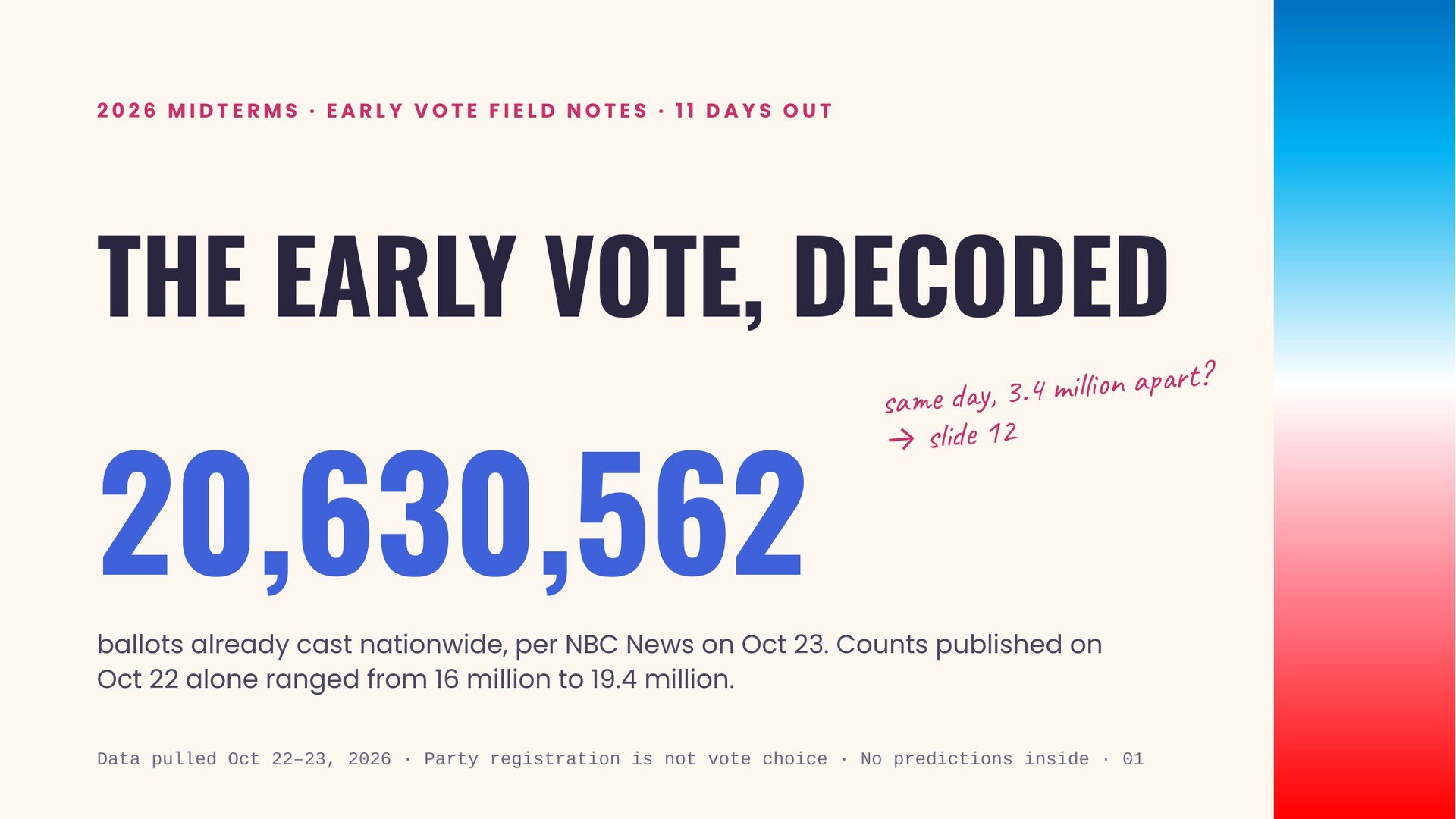
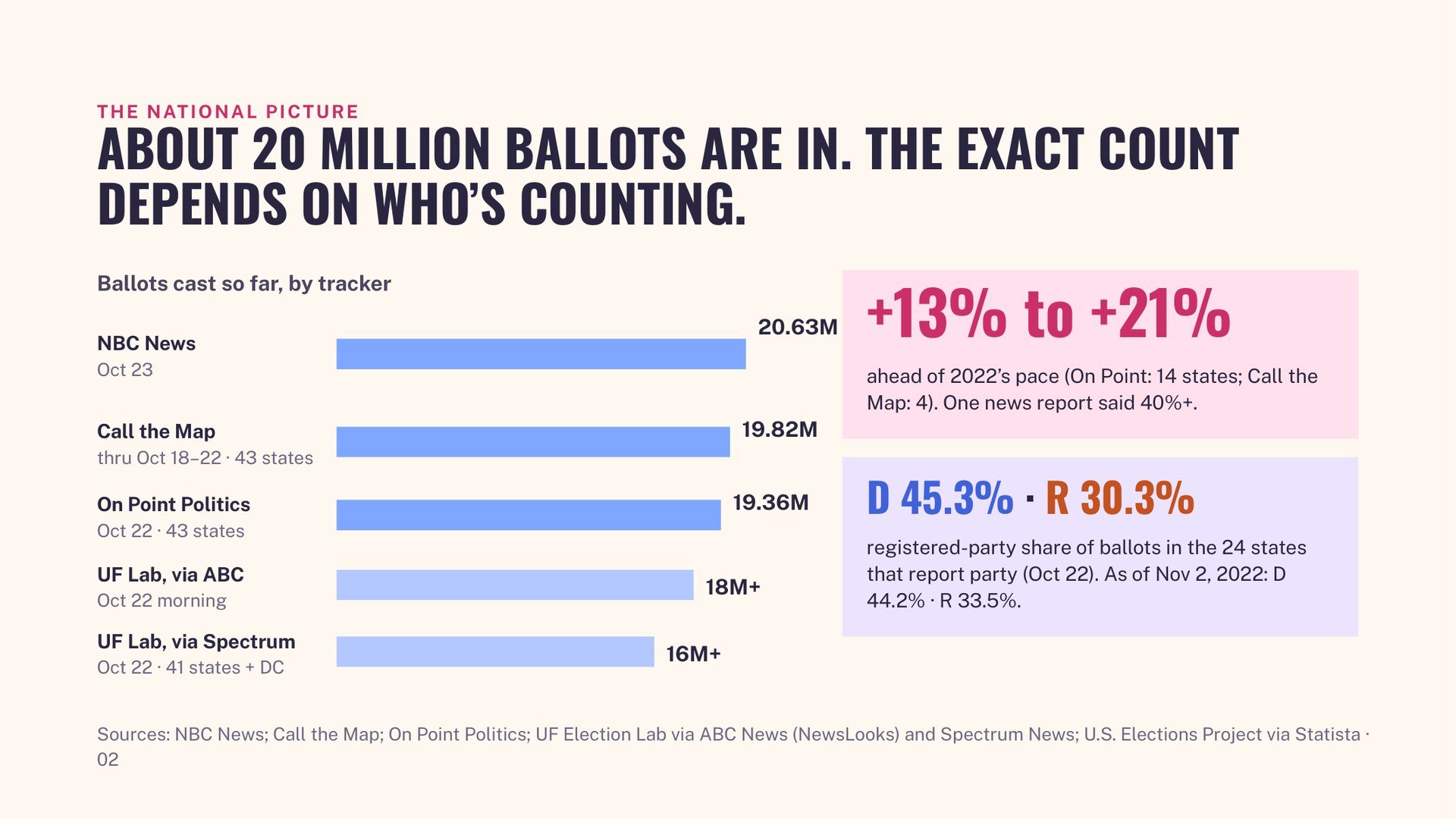
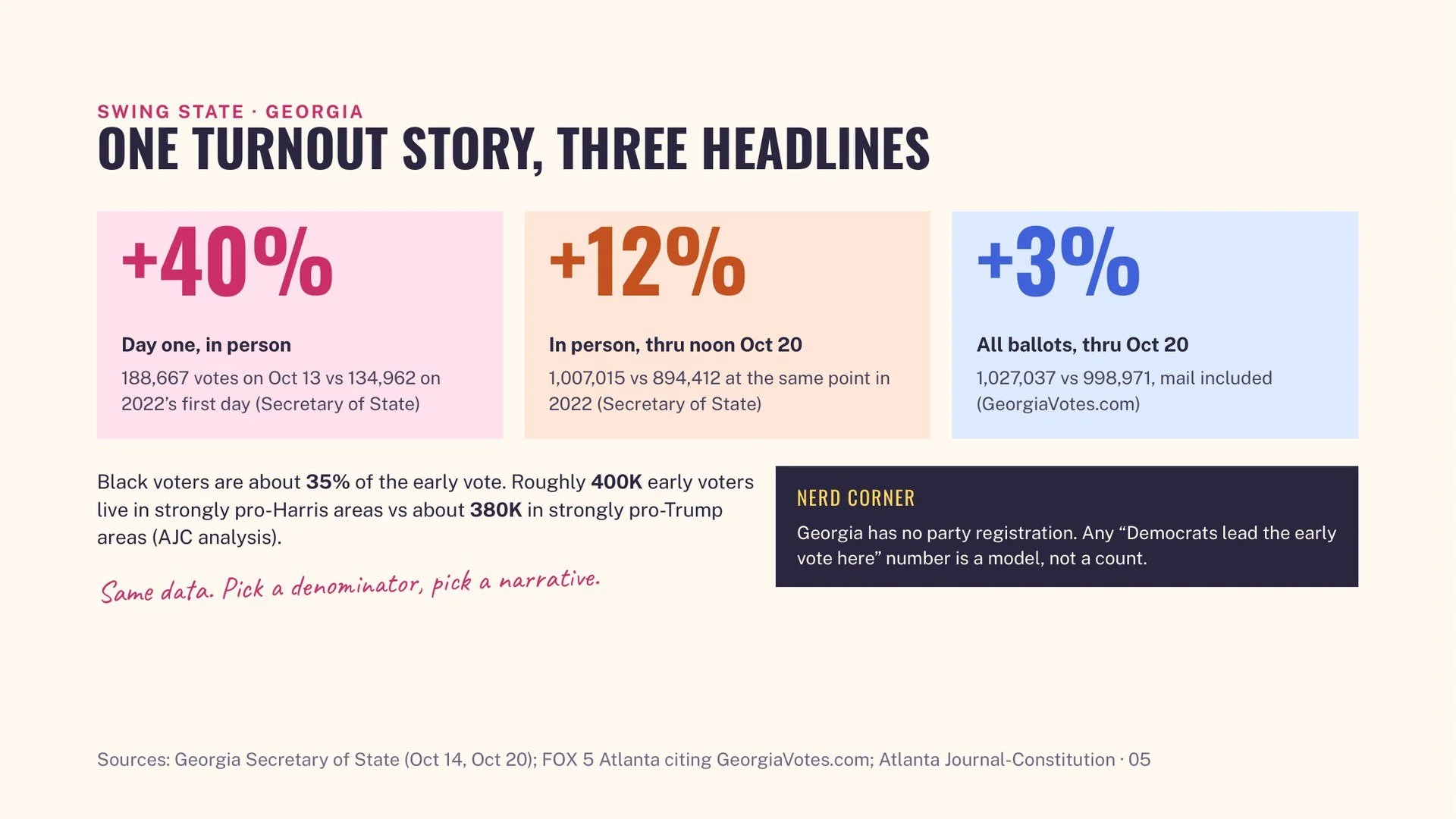
Over 20 million ballots were already in nationwide by Oct 23. But the exact count, and what it "means," depends on who's counting. Here's what the numbers can tell us, and what they can't.
20,630,562
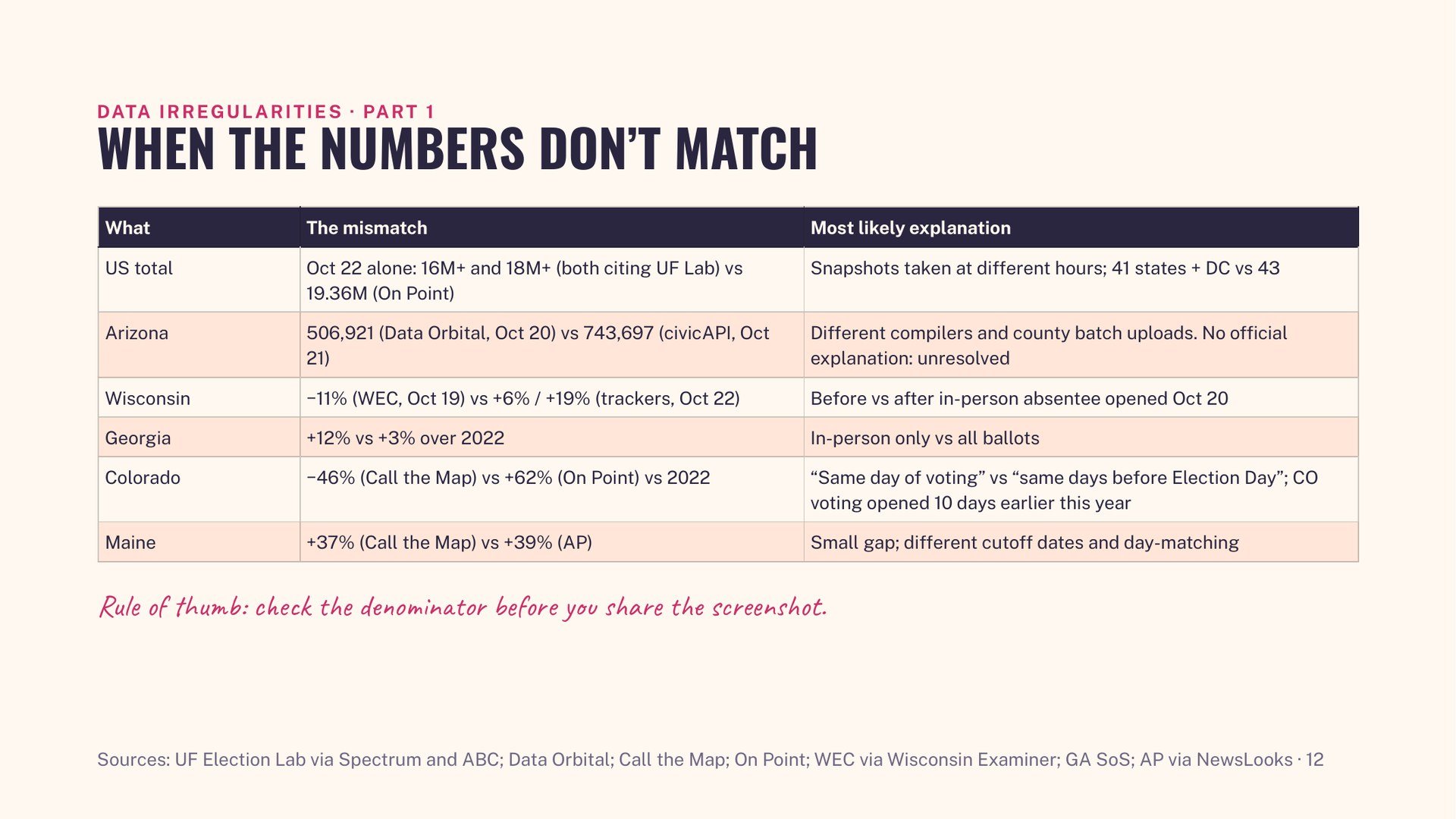
ballots already cast nationwide, per NBC News on Oct 23. Other trackers, the day before, ranged from 16 million to 19.4 million. Same election, different clocks. (Slide 12 explains why.)
READ BEFORE YOU POST
What this data can't tell us.
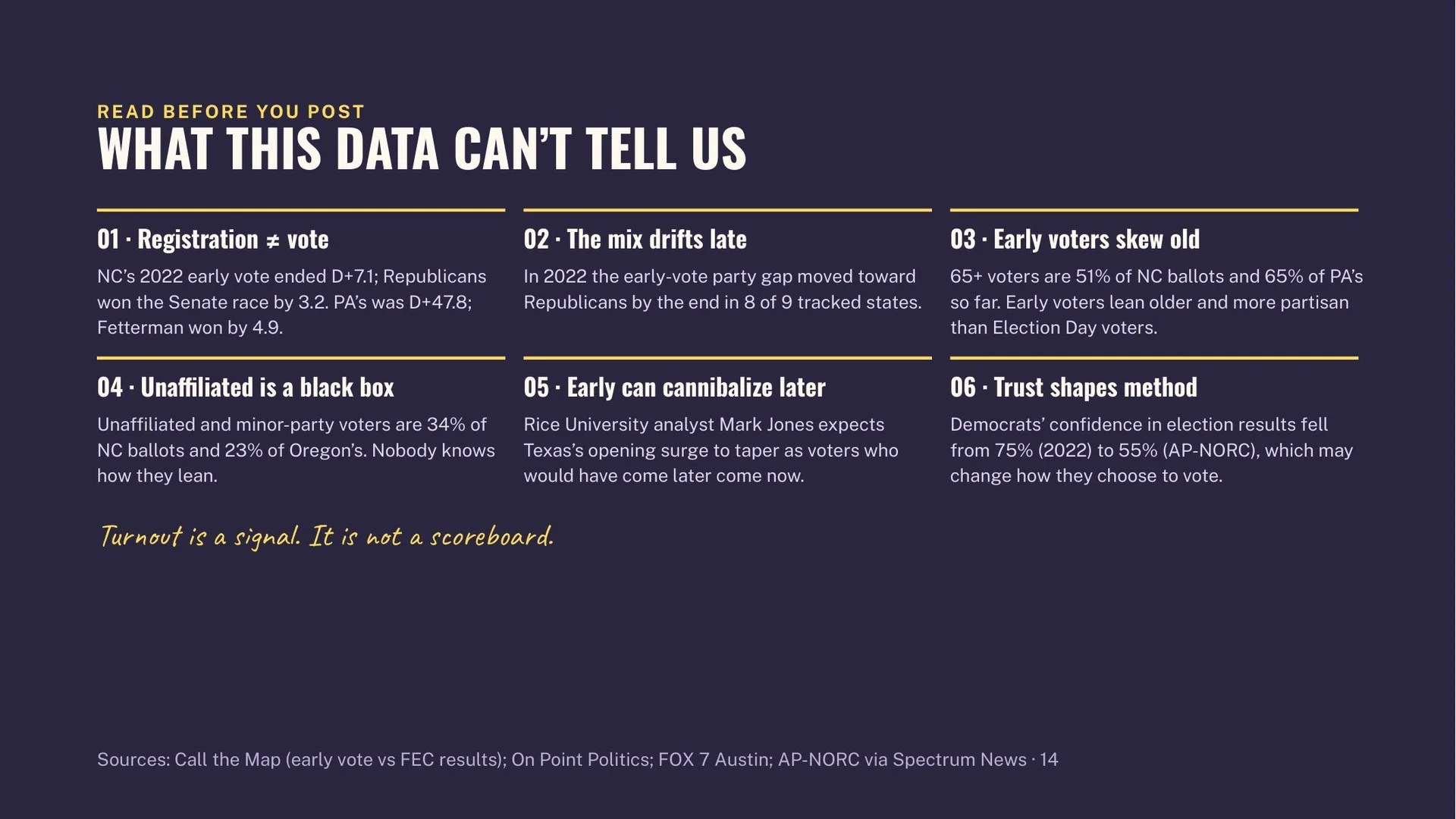
Early-vote numbers are a snapshot, not a forecast. Before you screenshot a chart and share it, run it through these six filters.
Turnout is a signal. It is not a scoreboard.
-
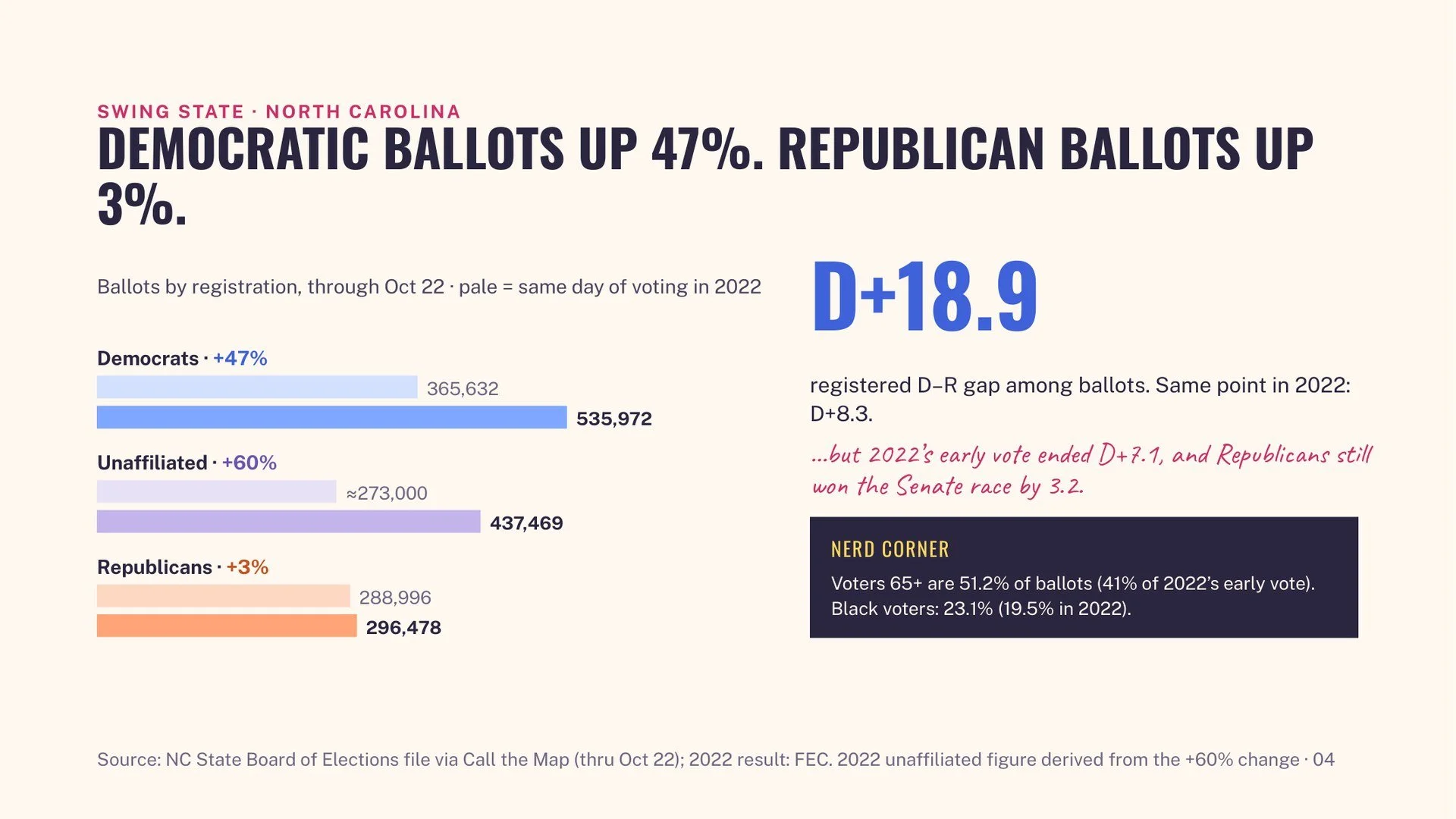
A ballot from a registered Democrat isn’t a vote for a Democrat. North Carolina’s 2022 early vote ended D+7.1, and Republicans still won the Senate race by 3.2. Pennsylvania’s was D+47.8; Fetterman won by 4.9.
-
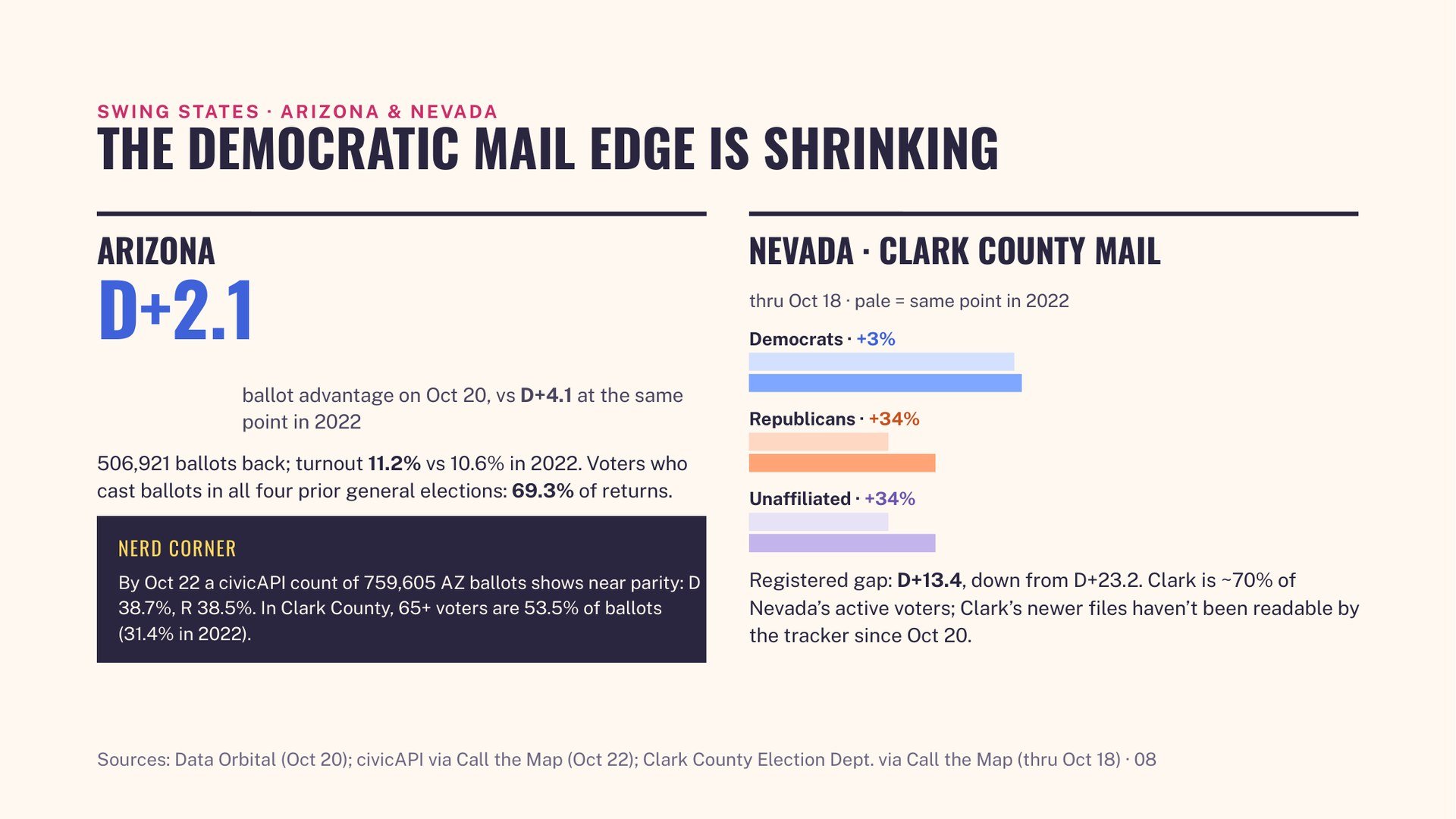
In 2022, the early-vote party gap moved toward Republicans by the end in 8 of 9 tracked states. Today’s gap is not the final gap.
-
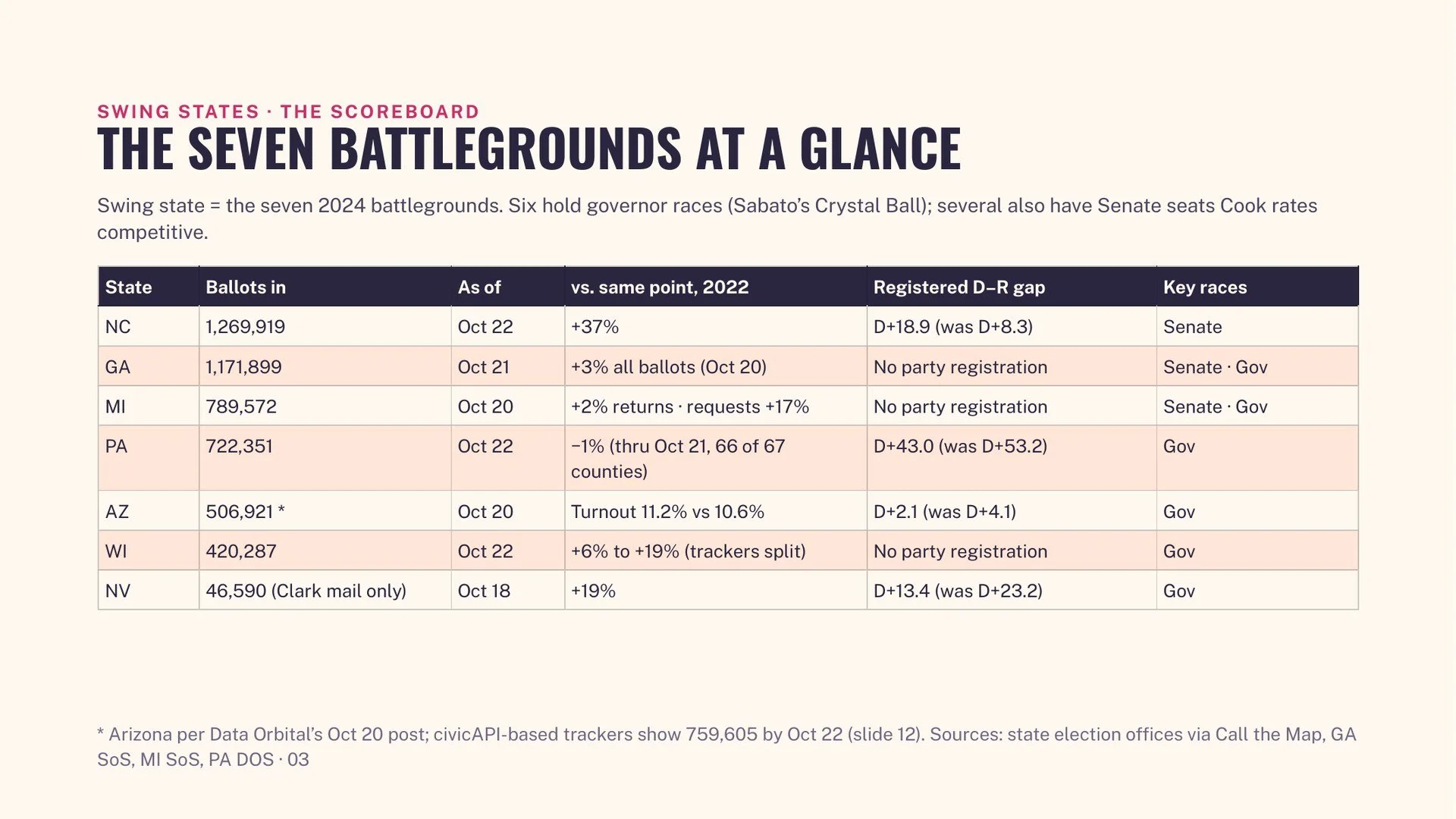
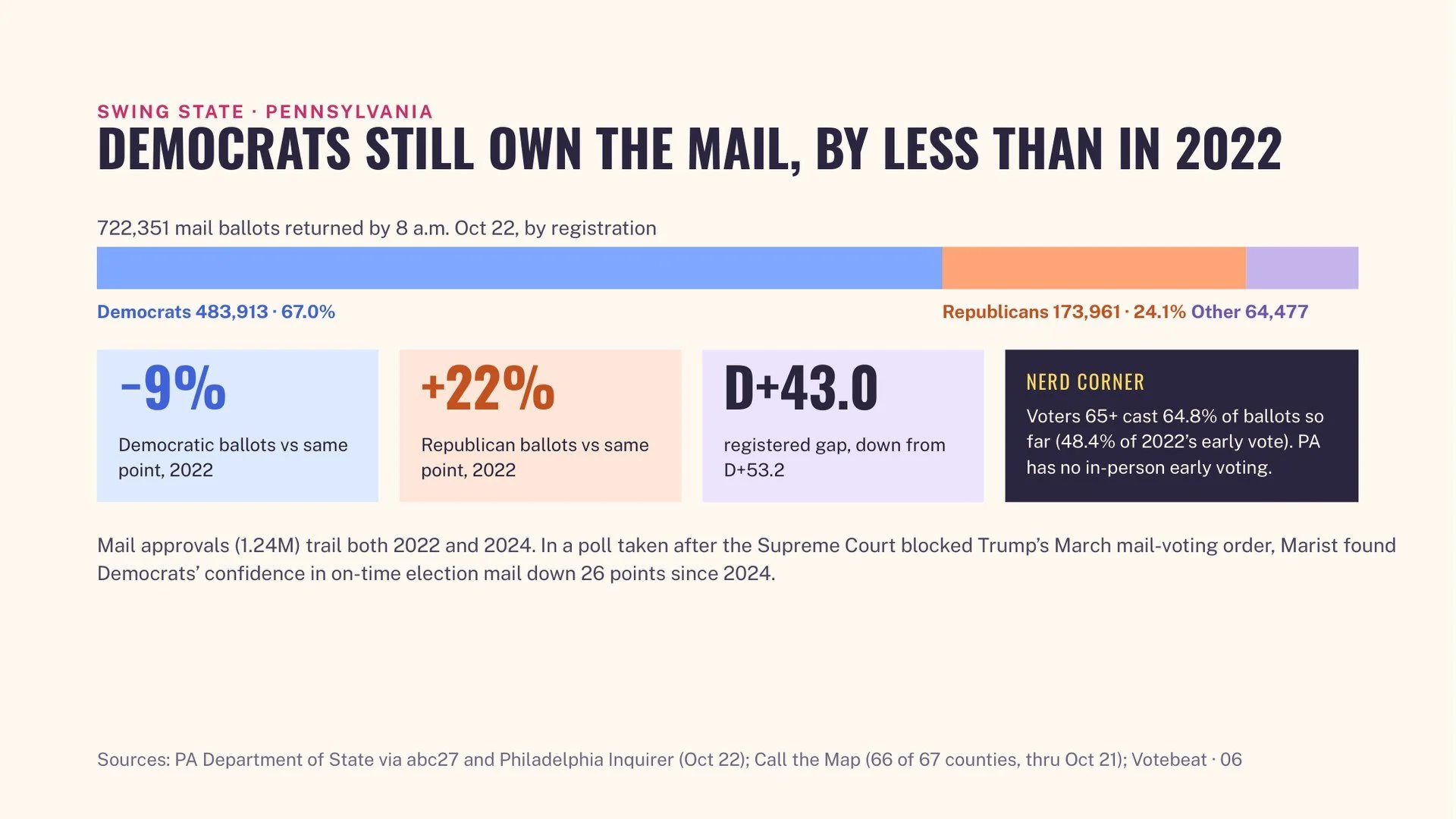
Voters 65+ are 51% of North Carolina’s ballots and 65% of Pennsylvania’s so far. Early voters lean older and more partisan than Election Day voters.
-
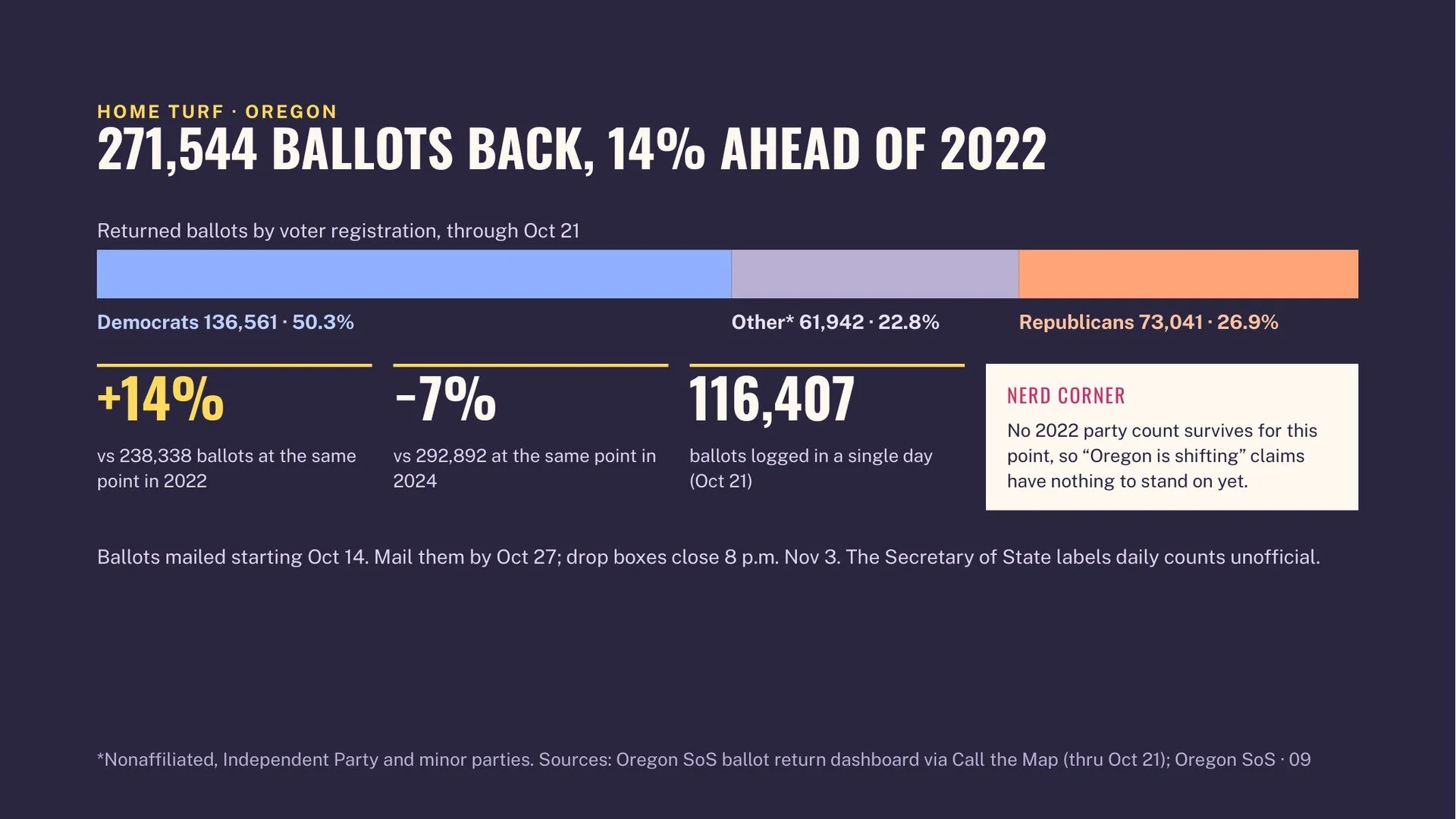
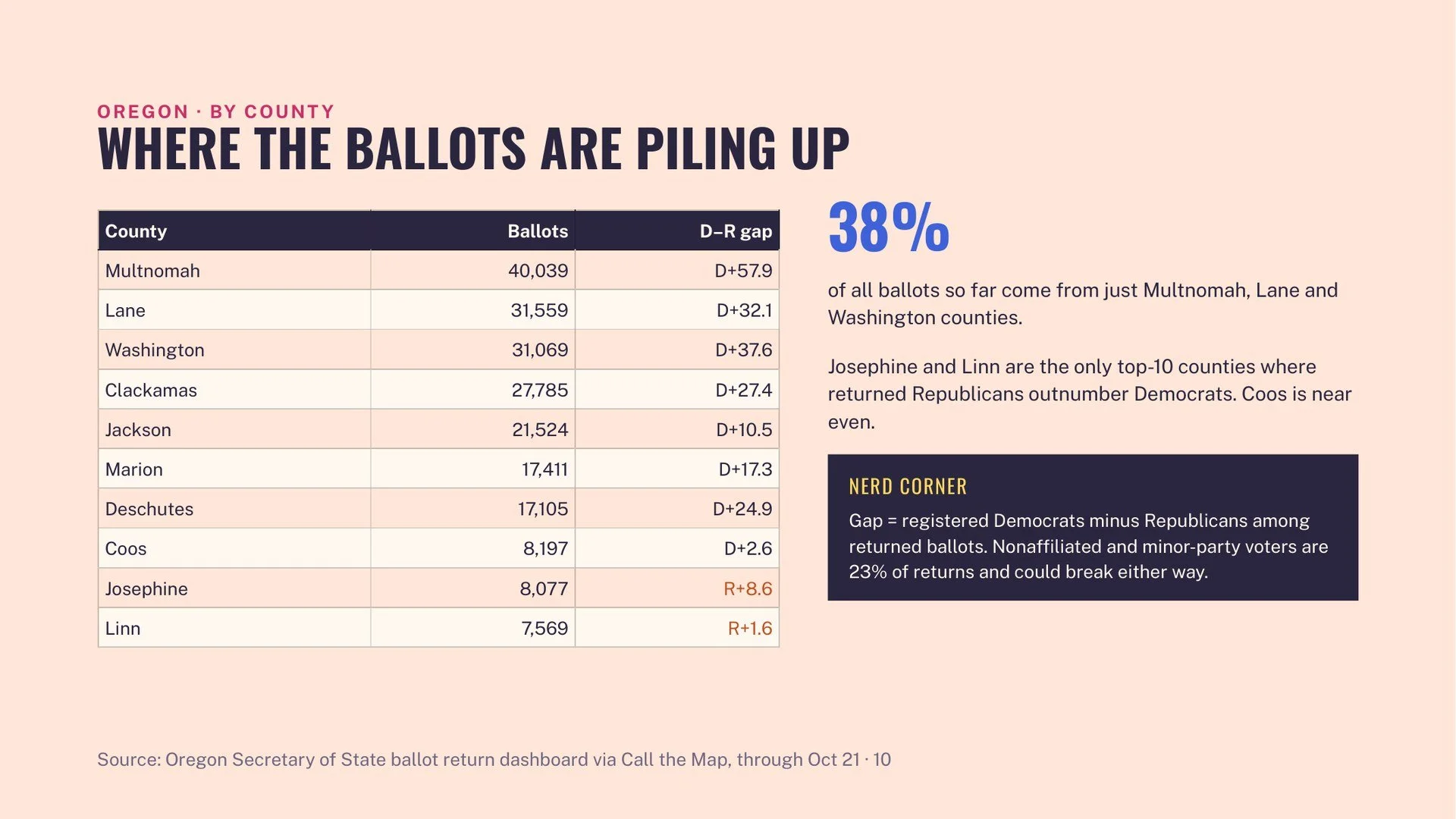
Unaffiliated and minor-party voters are 34% of North Carolina’s ballots and 23% of Oregon’s. Nobody knows how they lean.
-
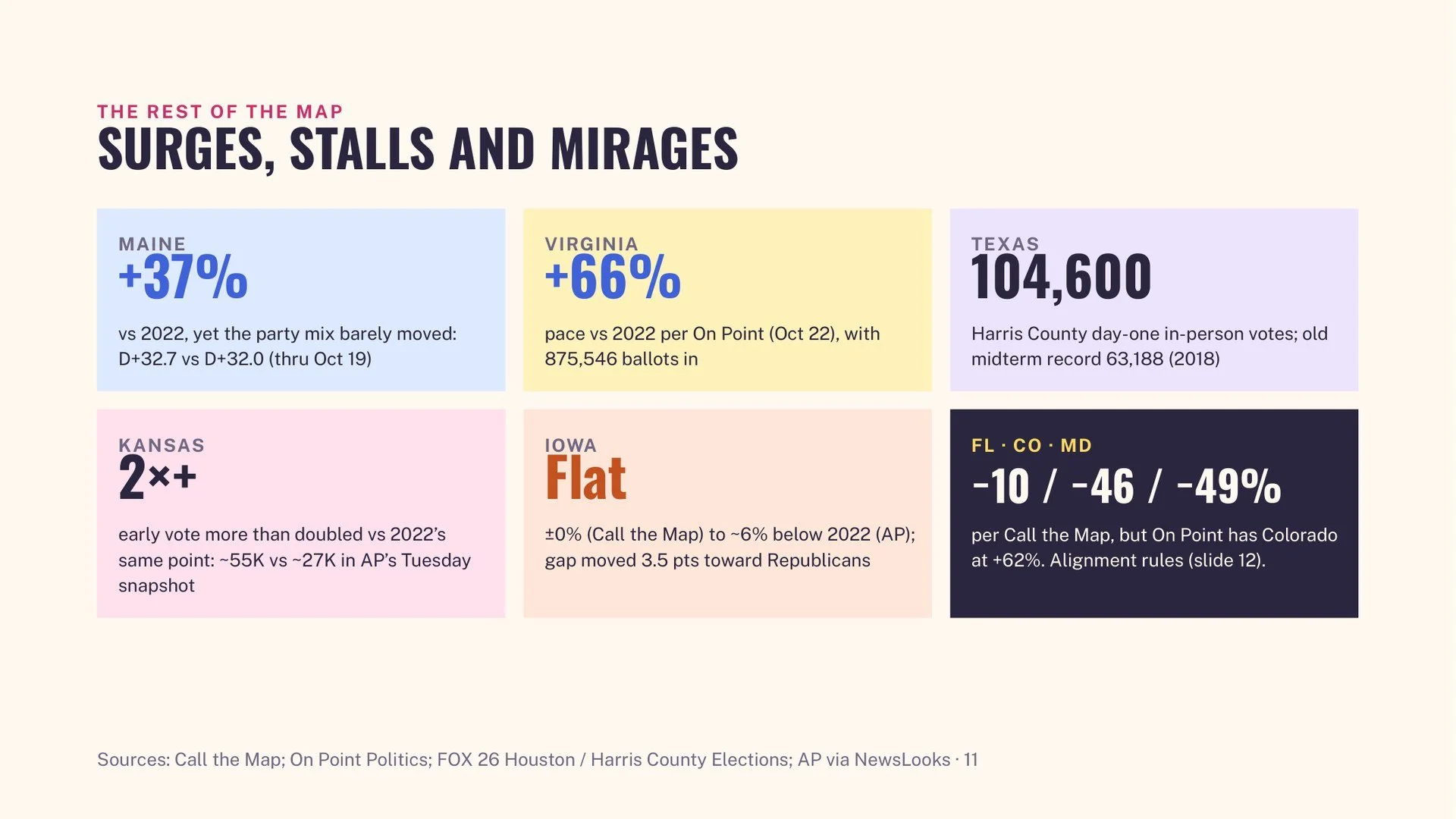
A surge can just mean people who’d have voted later voted sooner. Rice University analyst Mark Jones expects Texas’s opening surge to taper for exactly that reason.
-
Democrats’ confidence in election results fell from 75% (2022) to 55% (AP-NORC). That can change how people choose to vote, which changes what early numbers look like.